Why Some Genuine Visa Applicants Still Get Rejected During Interviews
One of the most painful experiences for visa applicants is walking out of an interview feeling confused. Not because they lied, not because their documents were fake, not because their goals were dishonest, but because they genuinely believed they were qualified.
Many applicants leave interviews thinking:
“I told the truth. So why was I rejected?”
That emotional frustration is real and it’s one of the biggest reasons visa interview rejections feel so personal. Applicants often spend years building academic profiles, saving money, preparing documents, and planning their future. So when a rejection happens despite genuine intentions, the experience can feel deeply unfair, but this is where many applicants misunderstand how visa interviews actually work.
Being genuine matters, but genuine intent alone does not automatically guarantee approval. Visa interviews are short, high-pressure conversations where communication heavily affects perception, and under pressure, even honest applicants can accidentally communicate uncertainty, confusion, nervousness, or inconsistency. That does not mean the applicant is dishonest. It means human communication changes under stress.
The Emotional Frustration Of “I Was Honest”
Many applicants approach visa interviews with a very simple expectation:
"Honesty answers what you say. Communication shapes how your honesty is understood."
That belief makes sense. Honesty feels like the safest strategy, but after rejection, applicants often become emotionally stuck because they cannot understand what went wrong. This creates a dangerous cycle.
Some applicants begin obsessively searching for:
hidden tricks,
secret rejection reasons,
“wrong words,”
or conspiracy-style explanations.
Others become convinced the interview system is completely random, but in many cases, the explanation is more subtle. Visa interviews are not only evaluating information. They are evaluating communication under pressure.
An applicant can be completely genuine while still struggling to communicate clearly and confidently during a stressful interview.
Why Eligibility Alone Doesn’t Guarantee Approval
One of the biggest misconceptions about visa interviews is believing strong eligibility automatically guarantees success. This misunderstanding is also one of the reasons many applicants struggle to make sense of 214(b) refusals.
Applicants often assume:
strong academics,
financial documents,
university admission,
or a legitimate profile
should be enough.
And while those factors absolutely matter, interviews still depend heavily on how information is communicated. This is especially important because many visa interviews are extremely short. Visa officers make decisions quickly, which means they rely not only on documents, but also on overall conversational impression.
For example, officers may observe:
clarity,
consistency,
pacing,
confidence,
answer structure,
and how naturally applicants explain their plans.
An applicant may have a genuine educational goal.
But if nervousness causes:
fragmented answers,
excessive hesitation,
unclear explanations,
or contradictory communication,
the overall interaction may become less convincing than the applicant intended.
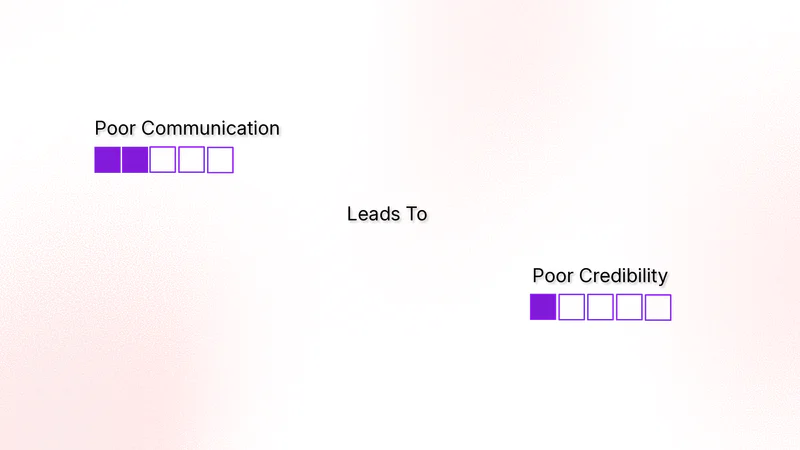
Again, this does not mean the applicant is dishonest. It means communication itself influences credibility.
A Strong Profile Can Still Lead to a Difficult Interview
How Nervous Communication Changes Impressions
Many applicants underestimate how strongly nervousness affects interviews. Anxiety does not only affect emotions, it changes communication behavior.
Under pressure, applicants often:
speak too quickly,
lose answer structure,
over-explain,
forget details,
avoid eye contact,
or sound less confident than they actually are.
Many applicants underestimate how dramatically nervousness can change communication during short visa interviews. This creates an important problem. Visa officers only see the version of the applicant that appears during the interview itself.
They cannot see:
how prepared the student was at home,
how genuine the intentions are internally,
or how differently the applicant behaves outside the stressful environment.
They only experience the live interaction, and because interviews happen quickly, nervous communication can unintentionally shape overall perception. For example, imagine an applicant who fully understands why they chose their university.
But during the interview:
anxiety disrupts pacing,
answers become fragmented,
explanations become repetitive,
and the applicant suddenly sounds uncertain.
The issue is not dishonesty. The issue is pressure disrupting communication clarity.
Clarity Vs Over-Explaining
One of the most common reactions to nervousness is over-explaining.
Applicants often believe:
“If I explain more, I’ll sound more convincing.”
But under pressure, excessive explanation usually creates the opposite effect.
Answers become:
longer,
less organized,
emotionally defensive,
and harder to follow.
This communication pattern is far more common than people realize and often comes from trying too hard to sound convincing. This is especially problematic in short visa interviews. Visa officers are not looking for speeches, they are looking for clear communication.
For example:
Clear answer
“I chose this university because of its cybersecurity specialization and internship opportunities.”
Over-explained answer
“Actually, there were many factors and after extensive research and consultation with various people I finally came to the conclusion that this university would comprehensively support my future aspirations in the technical field...”
The second answer may sound more detailed but it also sounds less focused. Over-explaining often happens because nervous applicants are trying too hard to sound convincing. Ironically, simpler communication usually feels more believable.
Why Credibility Is Partly Behavioral
This is one of the most misunderstood aspects of visa interviews. Applicants think credibility depends only on facts but human beings also interpret behavior. That means communication style affects how information feels during conversations.
For example, applicants who communicate naturally often appear:
calmer,
clearer,
more confident,
and easier to understand.
Meanwhile, highly nervous applicants may unintentionally appear:
uncertain,
overly rehearsed,
defensive,
or inconsistent.
This does not mean nervous people are less genuine. It means stress changes behavioral signals, and because visa interviews happen quickly, behavioral impressions become highly influential.
This is why interview preparation should focus on communication under pressure — not just memorizing information.
Why Realistic Speaking Practice Matters
Many applicants prepare by reading answers silently or memorizing responses mentally but visa interviews are live conversations. Communication behaves differently when spoken aloud under pressure. That is why realistic speaking practice matters.
Applicants need experience:
answering naturally,
organizing thoughts verbally,
handling interruptions,
recovering after mistakes,
and communicating clearly despite nervousness.
These are practical communication skills, and like any communication skill, they improve through repetition. This is also why realistic mock interviews are valuable.
Strong mock interview practice helps applicants become familiar with:
pressure,
unpredictability,
follow-up questions,
and real conversational pacing.
Over time, applicants become less focused on avoiding mistakes and more focused on communicating clearly. That shift changes interview performance dramatically.
Confidence Usually Develops After Practice
One of the biggest myths about visa interviews is believing confident applicants are naturally fearless. In reality, many successful applicants still feel nervous. The difference is that repeated speaking practice helps them continue functioning despite pressure.
Confidence usually develops after practice — not before it. That distinction matters because many applicants wait to “feel confident” before they practice speaking naturally but confidence rarely appears automatically. It is usually built through familiarity, repetition, and realistic communication experience.
Many genuine applicants still get rejected during visa interviews, not because they are dishonest, but because communication under pressure affects how their intentions are perceived.
Eligibility matters.
Documents matter.
But interviews are still human conversations.
And nervousness can quietly affect clarity, confidence, pacing, structure, and overall credibility.
That is why effective visa preparation should focus on more than memorizing ideal answers. Applicants need realistic speaking practice that helps them communicate naturally under pressure.
At Interviewivy, we believe preparation should help applicants become comfortable with real conversation — not just perfect scripts because in high-pressure interviews, confidence usually comes from familiarity, adaptability, and repeated communication practice.
Disclaimer
This article is for educational purposes only and is not legal or immigration advice. Visa decisions are made solely by U.S. consular officers based on your individual circumstances and applicable U.S. immigration laws and policies. While we strive to keep our content accurate and up to date, requirements and procedures may change. Always refer to official U.S. government resources for the latest guidance.