Why Some Applicants Sound More Credible — Even With Similar Profiles
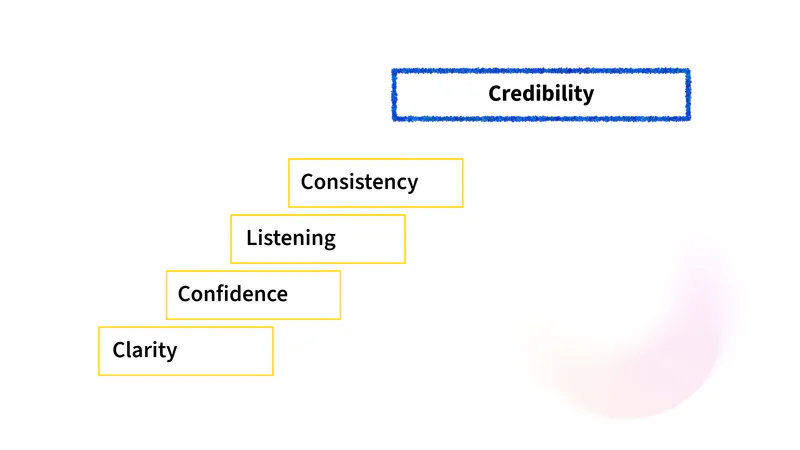
One of the strangest things about interviews is that two people can communicate almost identical information and create completely different impressions.
Both applicants may have:
similar grades,
similar finances,
similar universities,
similar plans.
But somehow one person sounds more believable.
Applicants often notice this and assume something invisible is happening. Maybe the other person was more confident, more experienced, more naturally gifted but credibility usually works differently.
Most of the time, credibility is not built from saying more, it is built from how information feels when it is communicated. That can feel frustrating because credibility sounds subjective but there are patterns, and many of them can actually be practiced.
Clarity
One of the fastest ways people judge communication is through ease. Not agreement, Ease. When somebody explains something clearly, the listener spends less energy trying to interpret meaning. That reduction in effort quietly increases trust.
This is why credibility often has less to do with sounding intelligent and more to do with sounding understandable.
Compare these:
“I strategically selected this program because it aligns with future multidisciplinary opportunities.”
vs
“I became interested in this field after working on related projects and wanted to build stronger practical skills.”
The second answer does not necessarily contain more information but it feels easier to believe because the reasoning feels easier to follow. Applicants sometimes confuse complexity with seriousness but credibility often rewards clarity.
"People rarely trust explanations because they sound complicated. They trust explanations because they make sense."
Consistency
Another thing people notice surprisingly quickly is internal consistency.
Does the story fit together? Do goals connect naturally? Do explanations match previous answers?
Credibility often increases when communication feels connected.
For example:
If an applicant explains choosing a course because of research opportunities, but later describes completely unrelated goals, the listener may experience friction, not because the applicant is dishonest, but because the narrative becomes harder to hold together.
Strong communication usually feels aligned, that does not mean rehearsed. It means decisions feel connected enough to make sense.
Consistency creates predictability and predictability often creates trust.
Emotional Congruence
This part is subtle. People do not only process words, they also notice whether emotion matches content.
For example:
Imagine somebody describing a meaningful decision with completely flat energy or describing a simple choice with unusually intense language. Sometimes nothing factually sounds wrong but something feels slightly disconnected. This is emotional congruence.
Do communication patterns match the meaning being expressed?
That does not mean applicants should perform emotion. Quite the opposite. Forced enthusiasm usually creates the same problem. Natural communication tends to feel believable because the delivery matches the message.
Credibility often increases when communication feels proportionate.
Communication Patterns
Another overlooked factor is rhythm.
Strong communication often sounds:
direct,
responsive,
calm,
and conversational.
Less credible communication sometimes becomes:
overly optimized,
defensive,
overloaded,
or difficult to follow.
Interestingly, credibility rarely comes from controlling every detail, it often comes from reducing friction. People tend to trust communication that feels:
easy to understand,
stable,
and natural.
Not perfect.
That distinction matters because many applicants accidentally reduce credibility by trying too hard to sound impressive.
Applicants sometimes assume credibility comes from saying more or using more sophisticated language. In reality, credibility often comes from reducing effort for the listener.
When your answers are easy to follow, logically connected, and directly address the question, the conversation feels smoother. That simplicity is often interpreted as confidence because the officer doesn't have to work to understand what you're trying to say.
What Builds Credibility During A Visa Interview?
Credibility Doesn't Mean Sounding Perfect
Many applicants believe they need to sound exceptionally confident or polished to appear credible. In reality, credibility is rarely about delivering flawless answers. It's about helping the listener understand your decisions without creating unnecessary confusion.
A clear explanation, a logical reason, or a calm clarification often contributes more to credibility than impressive vocabulary or rehearsed language. Applicants who communicate in a straightforward and consistent way usually appear more genuine because their attention stays on explaining their choices rather than managing their performance.
This is one reason realistic practice is so valuable. It helps applicants focus less on sounding impressive and more on becoming easy to understand.
Building Conversational Credibility
Most applicants think credibility begins before the interview usually it develops during the interaction.
Small moments influence impressions:
answering directly,
admitting uncertainty naturally,
staying with the question,
continuing calmly after mistakes.
That does not mean every interview becomes subjective it means communication creates context.
A useful question to ask during preparation is:
If someone removed my exact wording, would my explanation still make sense?
That question shifts preparation completely. Instead of trying to perfect language, applicants start strengthening understanding.
Another useful exercise:
Answer common questions three different ways. Not to find the strongest version. To prove that your explanation still works even when wording changes. That flexibility often increases credibility because it signals understanding, not performance.
Applicants often assume credibility comes from confidence, personality, or saying the right things, usually it is built differently. Two applicants can communicate similar facts and still create different impressions.
Because credibility is influenced by:
clarity,
consistency,
emotional congruence,
and communication patterns.
The good news is that these skills are rarely fixed traits. They improve with practice.
At Interviewivy, we believe preparation should help applicants become easier to understand, not more polished because credibility rarely sounds perfect. More often, it sounds natural.
Disclaimer
This article is for educational purposes only and is not legal or immigration advice. Visa decisions are made solely by U.S. consular officers based on your individual circumstances and applicable U.S. immigration laws and policies. While we strive to keep our content accurate and up to date, requirements and procedures may change. Always refer to official U.S. government resources for the latest guidance.