Why Hearing Yourself Back Feels Uncomfortable (And Why It Often Helps)
There is a surprisingly common moment that happens during interview preparation.
Someone practices an answer, feels reasonably confident, and then listens to themselves afterward.
And almost immediately thinks:
Do I really sound like that?
Sometimes the reaction is discomfort.
Sometimes surprise.
Sometimes the instinct is to stop listening altogether.
That reaction is more normal than most people realize.
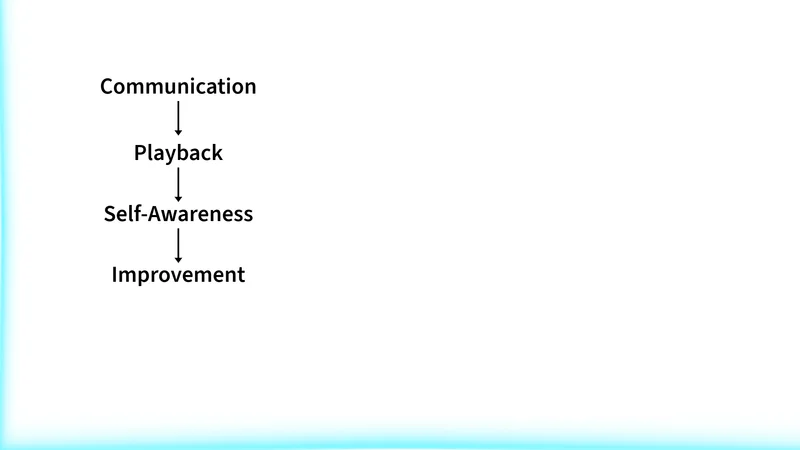
People spend their entire lives hearing themselves internally and relatively little time hearing themselves externally. We become familiar with how communication feels while speaking, not necessarily how it sounds when someone else experiences it.
That difference creates friction.
But it also creates awareness.
And awareness is often where improvement begins.
Why Self-Perception And Reality Feel Different
Most applicants do not judge communication using the same signals listeners use.
Internally, people notice intention.
They remember what they meant to say.
They know the context behind their explanation.
They understand what they were trying to communicate.
Listeners experience something else.
They notice pacing.
Structure.
Clarity.
Confidence.
What feels complete internally can sound rushed externally.
What feels natural can sound rehearsed.
What feels concise can sound abrupt.
That mismatch explains why hearing yourself back can feel unexpectedly uncomfortable.
It is not always because communication was poor.
Sometimes it is simply unfamiliar.
Why Discomfort Usually Appears First
Many people interpret discomfort as evidence something went wrong.
Usually it means something became visible.
Hearing yourself externally removes assumptions.
You notice filler phrases.
Repeated words.
Answers that felt shorter.
Moments where thoughts became less structured.
That awareness can feel uncomfortable because people expect communication to match intention more closely than it often does.
The temptation is to judge the entire performance.
But discomfort is rarely the goal.
Observation is.
The point is not discovering flaws.
It is noticing patterns.
What Becomes Easier To Notice
One reason external observation helps is because communication habits are often subtle.
People notice things they rarely catch while speaking.
They realize they begin difficult answers too quickly.
Or they explain more than necessary.
Or they become unusually formal under pressure.
Or they stop listening because they are preparing the next response.
Most of these patterns are small.
That is exactly why they matter.
Major mistakes are easy to identify.
Small habits quietly shape perception over time.
Once those habits become visible, preparation becomes easier to improve.
Separating Judgment From Improvement
One challenge with reviewing communication is that people often become evaluators instead of observers.
They start asking:
Did I sound good?
Did I look confident?
Would someone reject this?
Those questions usually create more pressure.
A better question is simpler:
What surprised me?
That question shifts attention.
Instead of evaluating identity, people begin observing behavior.
Communication becomes easier to improve once it feels adjustable.
Not personal.
Most improvement happens through noticing rather than fixing.
Feedback Without Overthinking
External observation becomes most useful when paired with perspective.
The goal is not reviewing every sentence or becoming hyper-aware of small imperfections.
The goal is reducing blind spots.
People often assume improvement comes from practicing more.
But awareness changes what practice actually produces.
Without awareness, repetition can reinforce habits.
With awareness, repetition becomes adjustment.
At Interviewivy, we believe preparation becomes more valuable when applicants can step outside their own experience and understand how communication actually feels from the other side.
Because improvement often starts with a surprisingly uncomfortable realization:
what felt normal internally may sound very different externally.