Why 214(b) Visa Rejections Happen
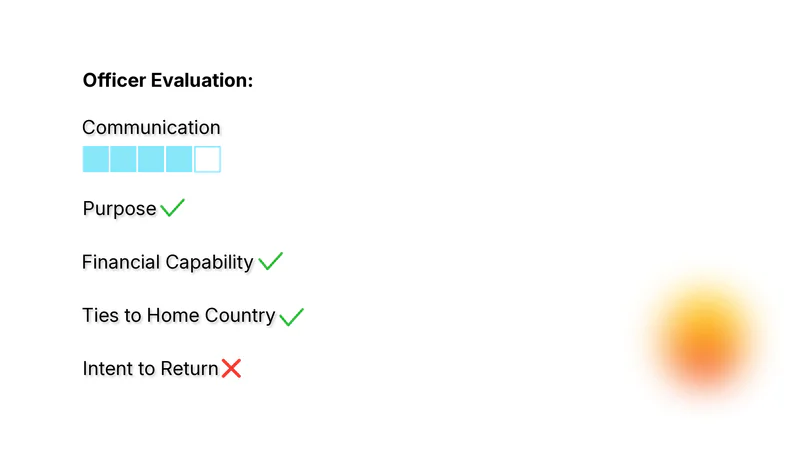
214(b) is one of the most common reasons for U.S. visa refusals.
And for many applicants, the rejection feels confusing.
You may have:
prepared your documents carefully
researched common interview questions
watched hours of YouTube advice
memorized “safe” answers
…and still walked out with a refusal.
What makes this frustrating is that many applicants assume:
“I got rejected because my profile wasn’t good enough.”
But in many cases, the issue is not qualifications alone. It’s how clearly and confidently applicants communicate under pressure.
Visa interviews are short, high-pressure conversations. Small communication gaps can create uncertainty quickly, especially when answers sound vague, inconsistent, or overly rehearsed.
Let’s understand what 214(b) means and look at some of the most common reasons 214(b) rejections happen.
214(b) Refusal at a Glance
What Does 214(b) Mean?
Section 214(b) of the U.S. Immigration and Nationality Act applies to temporary visas like:
F1 student visas
B1/B2 tourist visas
some temporary work visas
In simple terms, the officer is not fully convinced that the applicant qualifies under the visa category requirements.
This can happen for different reasons:
unclear intent
weak explanation of plans
inconsistent answers
communication gaps during the interview
A 214(b) refusal does not automatically mean:
you are dishonest
your future chances are over
your profile is “bad”
But it does mean the interview did not create enough clarity or confidence for approval.
Visa Officer Perspective
"A 214(b) refusal doesn't mean you're a bad applicant. It means the interview didn't provide enough confidence that you'll use the visa as intended and return home."
1. Lack of Strong Ties To Home Country
One of the most common reasons for 214(b) refusals is weak or unclear ties to the home country. For student and tourist visas especially, officers want to understand:
what connects you to your home country
whether your plans make long-term sense
what you intend to do after your stay
This does not mean applicants need “perfect” answers but vague responses can create uncertainty.
For example:
unclear future goals
generic career plans
weak explanations about returning home
inconsistent personal or professional plans
Sometimes applicants have strong reasons but struggle to explain them clearly during the interview and because visa interviews are short, unclear communication can quickly become a problem.
2. Vague Or Unclear Study Plans
This is especially common in F1 visa interviews.
Many applicants prepare broad answers like:
“This university is very good.”
“The U.S. has better education.”
“I want international exposure.”
The problem is that these answers sound generic because officers hear them constantly. What usually creates stronger credibility is clarity.
Applicants should be able to explain things like:
why they chose a specific course
how it connects to previous education
how it fits future career goals
why the university makes sense for them specifically
The issue is often not lack of intelligence or preparation. It’s that nervousness causes people to communicate in vague ways. Under pressure, even qualified applicants can struggle to organize their thoughts clearly.
3. Communication Gaps During The Interview
This is one of the most overlooked reasons behind visa refusals.
Many applicants focus he
documents
sample answers
memorization
“correct” responses
But real interviews are unpredictable.
And communication changes under pressure
Nervousness can affect:
speaking clarity
listening
confidence
response structure
speaking pace
natural conversation flow
In fact, many applicants underestimate just how much anxiety affects their communication during interviews. This is why some applicants sound:
overly rehearsed
robotic
inconsistent
confused during follow-up questions
Ironically, trying too hard to memorize perfect answers can sometimes make interviews harder because once the conversation changes direction slightly, applicants lose confidence quickly.
Why Realistic Practice Matters
Most people prepare for visa interviews silently.
They:
read blogs
watch YouTube videos
memorize sample answers
But the real interview is a live conversation. That’s a completely different experience. This is why realistic speaking practice matters much more than many applicants realize.
Platforms like Interviewivy help applicants practice visa interview conversations in a more realistic environment so they can improve communication, reduce nervousness, and become more comfortable answering questions under pressure.
The goal is not memorization. Strong preparation focuses on communication skills rather than simply memorizing answers.
The goal is learning how to communicate naturally and clearly when the real interview happens.
Why Memorized Answers Often Backfire
The internet has created a culture of “perfect visa answers", but real conversations rarely follow scripts exactly. When applicants try too hard to remember ideal wording, they often become:
more nervous
less natural
slower at responding
more dependent on memorization
This is one reason many students struggle to avoid sounding rehearsed during visa interviews.
Visa officers speak to hundreds of applicants regularly. They can usually recognize when someone is repeating prepared lines instead of responding comfortably and naturally.
Preparation absolutely matters but stronger preparation focuses on:
understanding your own story clearly
practicing realistic questions
improving communication through repetition
becoming more comfortable under pressure
Not memorizing “approved answers.”
Preparation Checklist:
✅Know Your Story
✅Practice aloud
✅Prepare follow-ups
✅Review DS-160
✅Stay concise
How To Prepare More Effectively
A better approach to visa preparation focuses on:
clarity
confidence
realistic speaking practice
structured communication
staying calm under pressure
Instead of trying to sound perfect, focus on:
answering naturally
keeping responses clear
understanding your own plans deeply
practicing speaking out loud
Confidence usually comes after practice, not before it.
214(b) refusals can feel discouraging, especially after months of preparation but many applicants misunderstand what actually affects interview performance.
Often, the challenge is not qualifications alone. It’s communication under pressure. That’s why realistic preparation matters.
The goal is not to sound rehearsed. The goal is to feel prepared enough to communicate clearly and naturally during an important conversation.
Practice Visa Interviews More Realistically
Interviewivy helps students and visa applicants practice realistic mock interviews, improve communication with feedback, and reduce uncertainty before important visa conversations.
Disclaimer
This article is for educational purposes only and is not legal or immigration advice. Visa decisions are made solely by U.S. consular officers based on your individual circumstances and applicable U.S. immigration laws and policies. While we strive to keep our content accurate and up to date, requirements and procedures may change. Always refer to official U.S. government resources for the latest guidance.